


















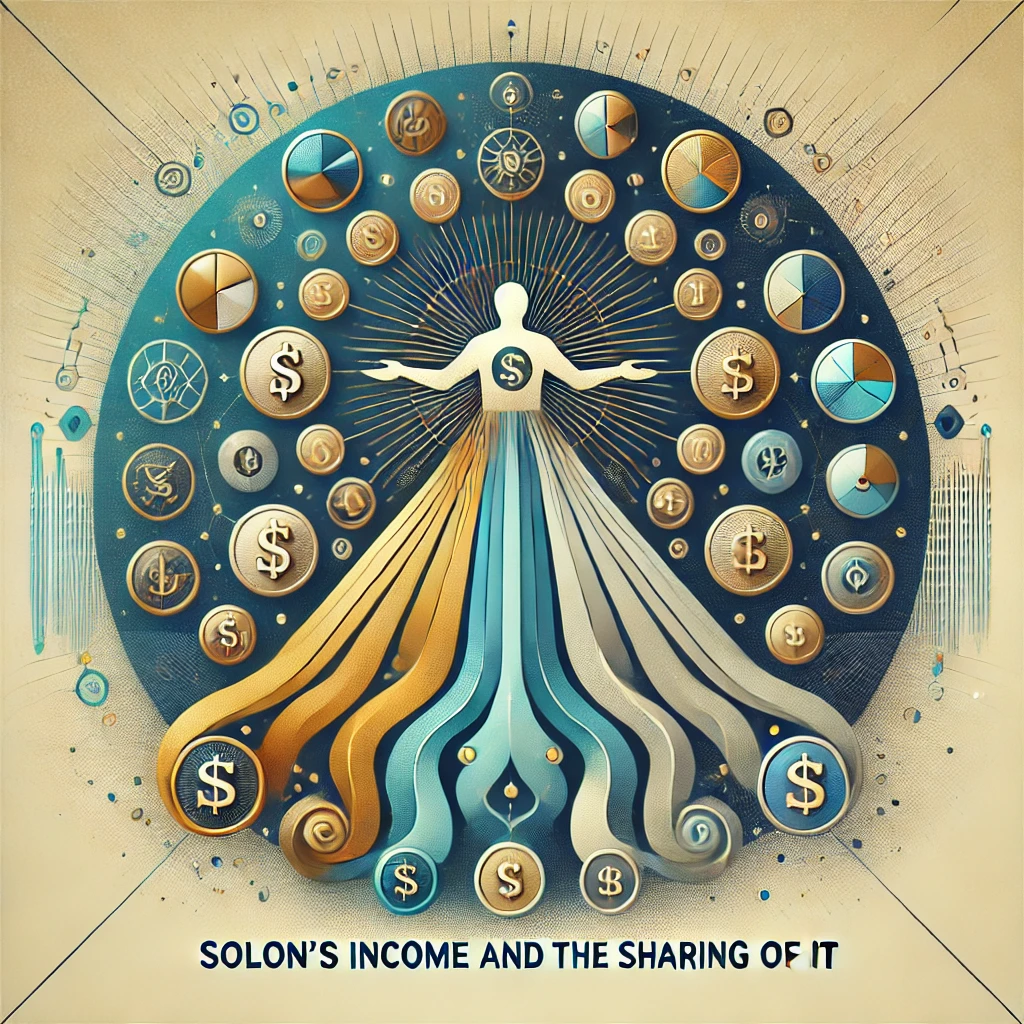







🌱 Does Solon Papageorgiou’s Framework Eliminate Markets?
Yes — the framework removes traditional competitive markets (buying/selling, profit-driven exchange, coercive scarcity, hierarchical ownership).
But no — it does NOT eliminate economic activity, value creation, specialization, production, or innovation.
Instead, it replaces markets with a non-coercive, post-market coordination system designed to remove exploitation, inequality, and coercion while preserving creativity, autonomy, and abundance.
This is similar to (but more advanced than):
Open-source coordination models
Gift economies
Post-scarcity micro-economies
Mutual-aid networks
Indigenous communal resource systems
The “circular local economy” model
But Solon’s framework is more structured, scalable, and modular.
🌍 So How Does the Economy Function Without Markets?
1. Needs-Based Resource Allocation (“NBRAs”)
Instead of buying and selling, individuals state their needs, and the micro-utopia distributes resources accordingly.
This is NOT central planning.
It is NOT communism.
It is NOT rationing.
It functions more like:
a continuously updated ledger of what people need
paired with what the community can produce or share efficiently
with full transparency and no punishment or coercion
This dramatically reduces waste, competition, inequality, and economic anxiety.
2. Contribution-Based Participation (“Contribution Webs”)
Instead of employment or jobs, people contribute to community well-being through:
skills
projects
passions
tasks they choose to perform
access to tools and infrastructure
Each contribution earns social credit / reputation / goodwill — NOT money.
Think of it as:
Open-source software development (Linux, Wikipedia)
Volunteer fire brigades
Community tool libraries
Maker spaces
Research collaborations
But integrated into the entire social and economic fabric.
3. Abundance Infrastructure
Micro-utopias invest in:
shared housing
renewable energy
community agriculture
high automation
shared transportation
public tools
co-creation spaces
healthcare cooperatives
free education centers
This creates system redundancy and local abundance so individual needs are covered without market exchange.
4. Voluntary Micro-Specialization
Talented individuals naturally gather around the tasks they enjoy or excel at.
Instead of market incentives, the system uses:
autonomy
recognition
community gratitude
intrinsic motivation
mastery
purpose
Research shows these outperform money for most creative and social tasks.
5. High Technology + Coordination Tools
The framework uses:
AI-assisted planning
dynamic resource inventory systems
transparent ledgers
local circular manufacturing
community robotics
zero-cost communications
This replaces market signaling with real-time, data-driven coordination, eliminating inefficiencies caused by price speculation, profit extraction, and artificial scarcity.
6. Voluntary Reciprocity Instead of Trade
If one micro-utopia has surplus, it shares or gives to another micro-utopia.
There is no “price.”
Instead, reputation flows, goodwill increases, and collaboration expands.
This resembles how:
open-source contributors collaborate
scientific communities publish
indigenous peoples share land and harvest
mutual aid networks distribute necessities
It is stable, high-trust, and anti-exploitative.
7. Zero-Cost Public Services
Micro-utopias aim to provide:
free housing
free food
free healthcare
free education
free utilities
free transportation
This drastically reduces the need for markets because basic survival is already guaranteed.
People are then free to contribute creatively, rather than labor for wages.
🎯 Summary: How the Economy Works Without Markets
| Feature | How It Works (No Market Version) |
|---|---|
| Allocation | Needs-based transparency system |
| Incentives | Autonomy, purpose, recognition, mastery |
| Production | Contribution Webs + automation + specialization |
| Exchange | Reciprocity, goodwill, sharing |
| Wealth | Abundance infrastructure, not private accumulation |
| Coordination | AI systems + community planning |
| Motivation | Self-determination + meaningful work |
The result is an economy that is:
post-market
post-scarcity (locally)
non-coercive
extremely efficient
ecological
human-centered
immune to financial crises