Ready for the future? A spectacular future for all!
Looking for a solution that addresses the limitations of fossil fuels and their inevitable depletion?
Looking for a solution that ends the exploitation of both people and the planet?
Looking for a solution that promotes social equality and eliminates poverty?
Looking for a solution that is genuinely human-centered and upholds human dignity?
Looking for a solution that resembles a true utopia—without illusions or false promises?
Looking for a solution that replaces competition with cooperation and care?
Looking for a solution that prioritizes well-being over profit?
Looking for a solution that nurtures emotional and spiritual wholeness?
Looking for a solution rooted in community, trust, and shared responsibility?
Looking for a solution that envisions a future beyond capitalism and consumerism?
Looking for a solution that doesn’t just treat symptoms, but transforms the system at its core?
Then look no further than Solon Papageorgiou's micro-utopia framework!
🌱 20-Second Viral Summary:
“Micro-Utopias are small (150 to 25,000 people), self-sufficient communities where people live without coercion, without hierarchy, and without markets. Everything runs on contribution, cooperation, and shared resources instead of money, mutual credits, time banking, bartering and authority. Each micro-utopia functions like a living experiment—improving mental health, rebuilding human connection, and creating a sustainable, crisis-proof way of life. When one succeeds, it inspires the next. Micro-utopias spread not by force, but by example. The system scales through federation up to 25,000 people. Afterwards, federations join a lightweight inter-federation circle, a meta-network, The Bridge League.”
Solon Papageorgiou’s framework, formerly known as the anti-psychiatry.com model of micro-utopias, is a holistic, post-capitalist alternative to mainstream society that centers on care, consent, mutual aid, and spiritual-ethical alignment. Designed to be modular, non-authoritarian, and culturally adaptable, the framework promotes decentralized living through small, self-governed communities that meet human needs without reliance on markets, states, or coercion. It is peace-centric, non-materialist, and emotionally restorative, offering a resilient path forward grounded in trust, shared meaning, and quiet transformation.
In simpler terms:
Solon Papageorgiou's framework is a simple, peaceful way of living where small communities support each other without relying on money, governments, or big systems. Instead of competing, people share, care, and make decisions together through trust, emotional honesty, and mutual respect. It’s about meeting each other’s needs through kindness, cooperation, and spiritual-ethical living—like a village where no one is left behind, and life feels more meaningful, connected, and human. It’s not a revolution—it’s just a better, gentler way forward.
Here’s a Governance Toolkit: Councils + Task Forces designed specifically for micro-utopias, written in practical, implementable form:
Governance Toolkit: Councils + Task Forces
Micro-utopias thrive on structured participation without bureaucracy or coercion. Councils and task forces provide modular governance mechanisms that are flexible, transparent, and participatory.
1. Principles of Micro-Utopia Governance
Transparency: All decisions and processes must be accessible to the community.
Rotation: Leadership roles rotate regularly to prevent hierarchy.
Consent-Based Decision-Making: Everyday decisions use consensus; structural changes use supermajority (70–80%).
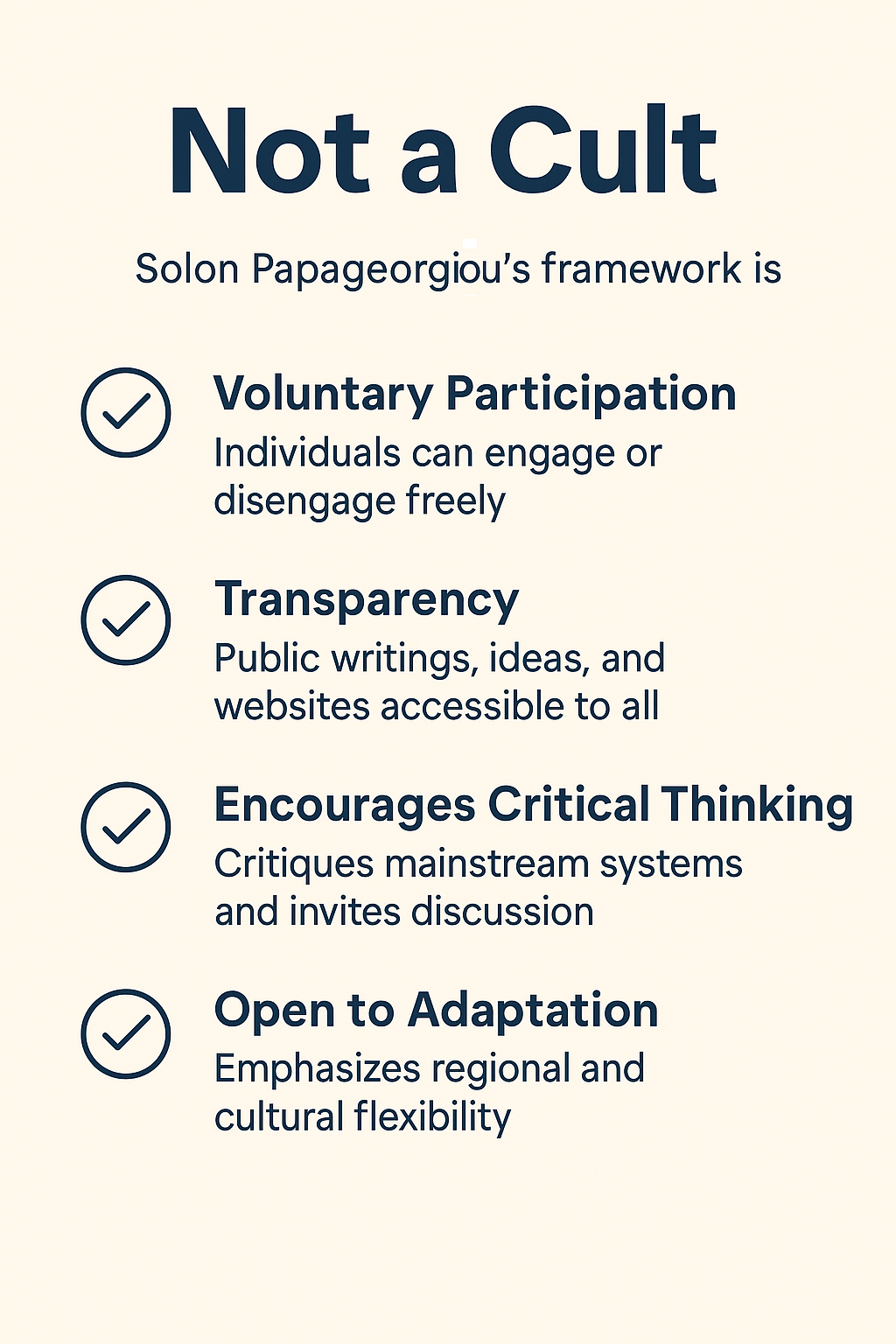
Non-Coercion: Participation is voluntary; no penalties for opting out.
Accountability: Councils and task forces report back to the full Assembly regularly.
2. Councils
Definition: Permanent or semi-permanent governing bodies responsible for core domains.
Types of Councils
Steering Council
Oversees overall strategy and long-term vision.
Coordinates task forces and inter-council communication.
Well-Being Council
Manages emotional support, conflict resolution, and community health initiatives.
Resource & Sustainability Council
Handles communal resources, food systems, energy, and environmental monitoring.
Membership & Integration Council
Oversees onboarding, inclusion, and integration of new members.
Structure & Operation
3–7 members per council
Rotating 3–6 month terms
Meetings weekly or biweekly
Decisions documented and shared openly
Reports back to the community Assembly monthly
3. Task Forces
Definition: Temporary, project-specific groups formed to accomplish a defined goal.
When to Use
Launching a community garden
Organizing a cultural festival
Building digital infrastructure
Conducting emergency response drills
Structure & Operation
2–5 members (can include external volunteers)
Limited duration (1–3 months, or until task completion)
Clear mandate and deliverables
Reports to relevant Council or Assembly
Key Practices
Assign a facilitator to coordinate meetings
Keep communication simple and documented
Celebrate task completion and share lessons learned
4. Assembly Oversight
All councils and task forces report to the Community Assembly, the sovereign decision-making body.
Assemblies meet monthly or quarterly to review:
Council decisions
Task force outputs
Resource allocation
Conflicts or concerns
Assembly members can question, suggest, or veto actions based on consensus principles.
5. Example Workflow: Council + Task Force
Steering Council identifies need: “Build a rainwater collection system.”
Task Force formed: 3 members with relevant skills.
Task Force delivers plan and prototype within 6 weeks.
Report submitted to Resource & Sustainability Council.
Council reviews and recommends approval.
Community Assembly votes by consensus to implement.
Completion and evaluation documented in shared ledger.
6. Governance Best Practices
Document Everything: Keep minutes, decisions, and action items accessible.
Rotate Roles Frequently: Avoid consolidation of power.